r é n In the Kitchen With: Romeo Morelli
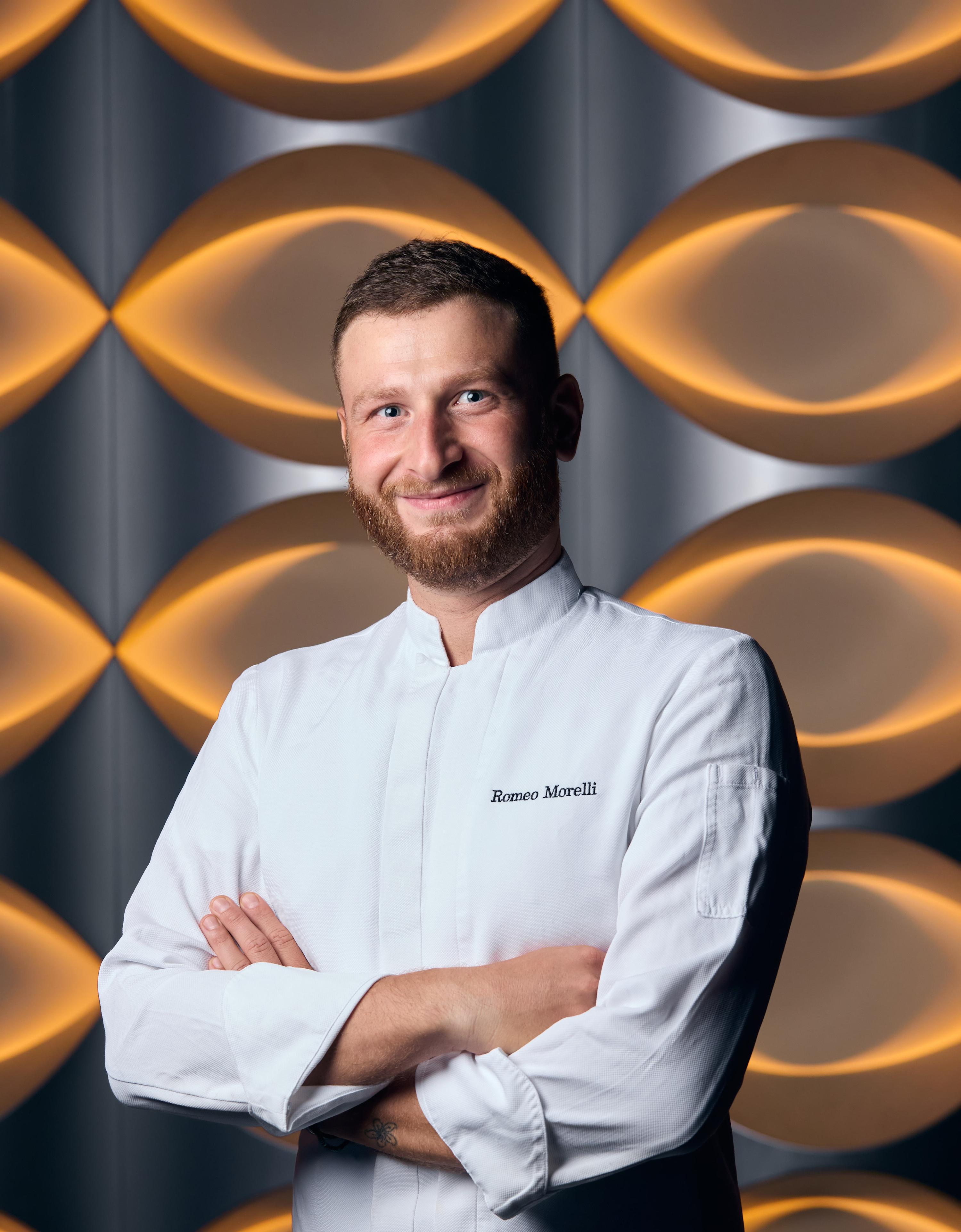
After several years in Hong Kong, aqua’s chef Romeo Morelli has found an understanding of what it takes to be in one of the most competitive food scenes in the world – and why that gives him a sense of pride and purpose.
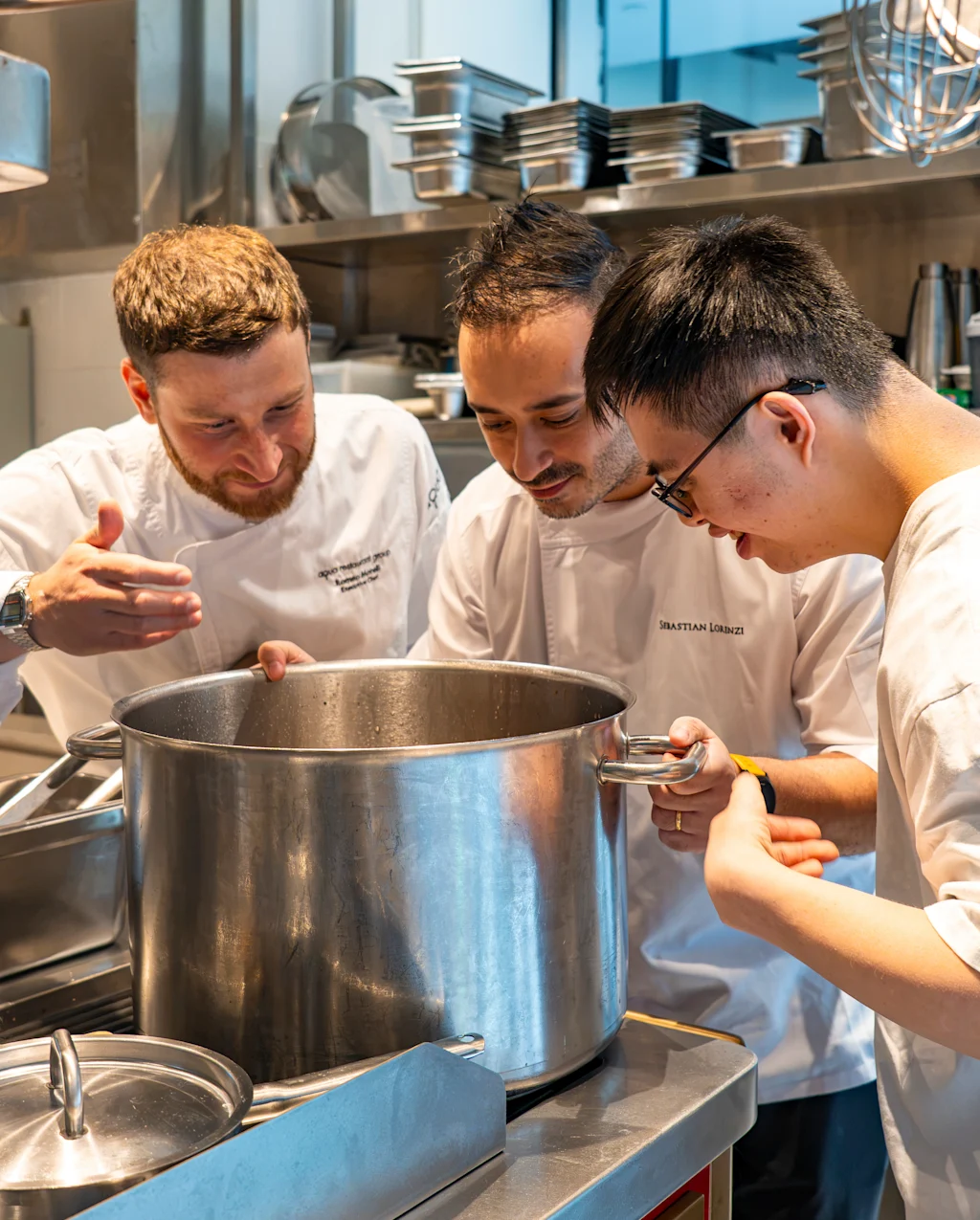
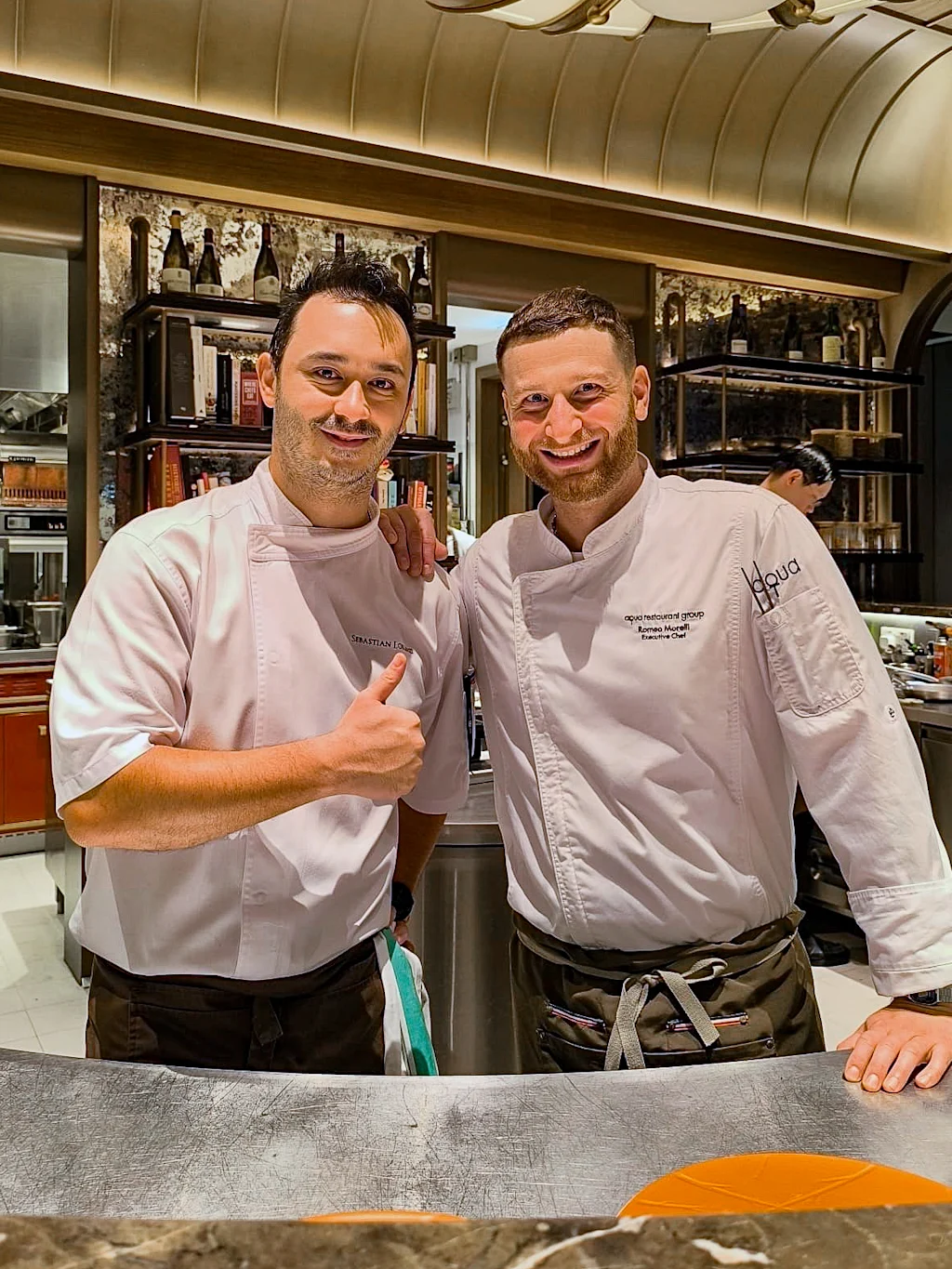
Last month, aqua’s chef Romeo Morelli came together with us and Té Bo’s chef Sebastian Lorenzi for a one-night-only four-hands dinner to celebrate our beneficiaries – one of whom, Ah Hei, helped out at the event – through a dazzling menu spotlighting idyllic Italian summers, and that gave me the massive pleasure of reconnecting with a friend I had first met during his tenure at the Piedmontese restaurant Castellana.
We had connected multiple times before, mainly at his then restaurant in Central, but our conversations mostly revolved around his food (and my dozens of questions about how to make handmade pasta at home as great as his), as you’d expect between a former food editor and a chef who had begun working in his family restaurant’s kitchen when he was just 12 years old. But this time, we had the opportunity to really sit down and talk about his experience in the culinary world.
Starting his journey working for his parents in their cosy family-style restaurant in Asti, Piedmont, when he was barely a teenager, Romeo’s growing passion for cooking led to a short-lived career in engineering before he finally decided to become a chef. “I was working a nine-to-five in Italy as a surveyor, and it was a very secure job with a great salary, but it wasn’t really making me happy,” he recounts. “It didn’t give me the satisfaction I was looking for. I enjoyed working with my hands, so I left that job after three months, and never looked back.”
From there, he returned to his family restaurant before embarking on an adventure across the globe, bringing him to vibrant cities like Abu Dhabi, Stuttgart, and Singapore, before he arrived in Hong Kong right at the height of the pandemic. Having lived and worked in such large cities before, I ask if he had to adapt to Hong Kong when he first came.
“No, it was not a complete shock,” he says, “but I’d say it’s a very different lifestyle here. In Singapore, the city is bustling, but the energy is a little different from Hong Kong. There, you feel like you’re in a big city, but there’s a calmness to it, sort of like a big city in Europe. Here, there’s a lot of energy everywhere, and it’s very exciting – there are always things happening. I saw things here I’ve never seen before in my life. I think you might be able to see something similar in New York or London, but nowhere else. You can tell the Hong Kong market is very tied to how people live here, so when the local economy is up – say the market went up 20% a day – you’re seeing guests treating themselves with a nice lunch right away.”
But it’s not just the spending habits that Romeo says sets Hong Kongers apart from the diners he’s served elsewhere in the myriad of countries and continents he’s worked in. With locals who are well travelled and a large expat community, naturally the standard of knowledge about food from all across the globe is high.
“People here really understand what they are eating,” the chef explains. “They’re eating because they know what they want, and because they want to learn about the cuisine and the chefs. They’re not just eating to fill their bellies; they’re eating with consciousness.”
The mention of eating simply to feed bellies was a concept I had previously discussed with chef Cedric Satabin of Alain Ducasse at Morpheus during my time as a food editor for a magazine. On a visit to his two-Michelin-starred restaurant, he told me how some hotel guests were rather preoccupied with the casino, and because they had the money, they’d come to his restaurant for lunch, but didn’t quite care about what they ate. The restaurant would often receive requests to serve a five-course lunch menu in under 30 minutes.
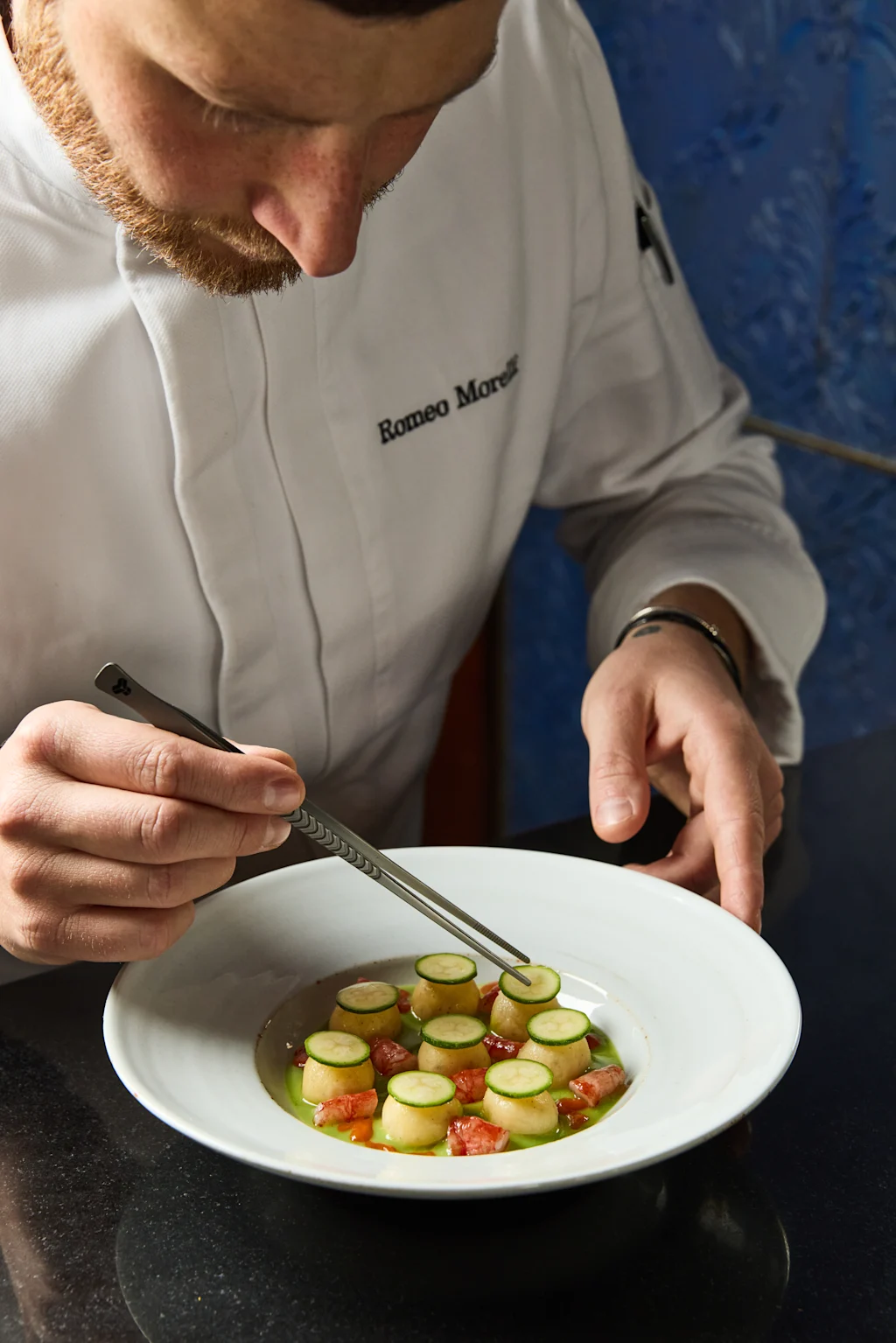
Fortunately for Romeo, who you can feel pours his heart and soul into every one of his creations, the audience in our city shows a different kind of appreciation for gastronomy. “I’m learning a lot from my guests because they’re so knowledgeable,” he tells me. “They’re a good challenge to have, and I evolve myself whenever I receive feedback from them. I also keep pushing to improve because Hong Kong has so many world-class restaurants.”
And that we do. Just the other week, during a pizza workshop at Black Sheep’s Motorino with chef Roberta de Sario, I was told how she had risen to a 63rd ranking on the global Best Pizza list for 2026. Somehow, more than 9,000 kilometres from Naples, Hong Kong has one of the best pizzerias on the planet – and that’s just one example. Whether it’s restaurants like The Chairman, Caprice, Wing and Ta Vie or bars like Bar Leone, COA or MIUS, our F&B industry is among the strongest in the world, and not just for local Chinese cuisine. I ask how Romeo feels to be part of this before our hour-long conversation was cut short because lunch service demanded his return to the kitchen, the domain he knows best.
“I’m very honoured and grateful,” he admits, “because Hong Kong is a very competitive market with amazing restaurants everywhere. To be able to continue doing what I’m doing is really a privilege, and gives me both a great sense of satisfaction and pride.
“But sometimes, it can also be difficult for me, because I have – what do they call it?” Imposter syndrome, I suggest to him. “Yes, imposter syndrome. At times, I will think that I’m not good enough at what I do. I think this is something many people – not just in Hong Kong, but all over the world – deal with, and it’s a very tough feeling. But I think you can also use it as energy. In a way, it’s due to this feeling that I’m still able to continue doing what I love most, because it pushes me to constantly try to improve myself and do better. It gives me the motivation to face my challenges.”